
Current Bag Assessment
Understand what the golfer currently plays, what feels good or poor, where confidence is high or low, and what problem they are trying to solve.

Fitting & Simulator Training
The right equipment should support the golfer rather than force the golfer to compensate for poorly suited specifications. 4D Golf connects equipment understanding, ball-flight information and purposeful practice to help golfers make clearer decisions about both their clubs and their development.
A fitting should identify the right equipment —
not simply justify selling new equipment.
The purpose of a fitting is to understand what the golfer is producing with the current equipment, where there may be limitations, and whether a different specification can improve performance, consistency, confidence or gapping.
The fitting question
Useful fitting starts with practical questions about the golfer’s flight, delivery, confidence and the jobs their equipment needs to perform.
Is the current club length appropriate?
Does the shaft weight, flex or profile suit the golfer’s delivery?
Is launch too high or too low?
Is spin helping or hurting the flight?
Is strike consistent across the face?
Is the club starting the ball where the golfer expects?
Are carry distances predictable?
Are there large or overlapping distance gaps?
Does the club inspire confidence at address?
Is the equipment helping the golfer repeat the intended shot?
The process
The exact path depends on the golfer and club category. Relevant stages can build a clearer comparison without assuming every fitting needs every step.
Understand what the golfer currently plays, what feels good or poor, where confidence is high or low, and what problem they are trying to solve.
Establish current ball flight and performance before changing equipment.
Where relevant, compare launch, spin, forgiveness, trajectory, strike behaviour, visual confidence and shot pattern.
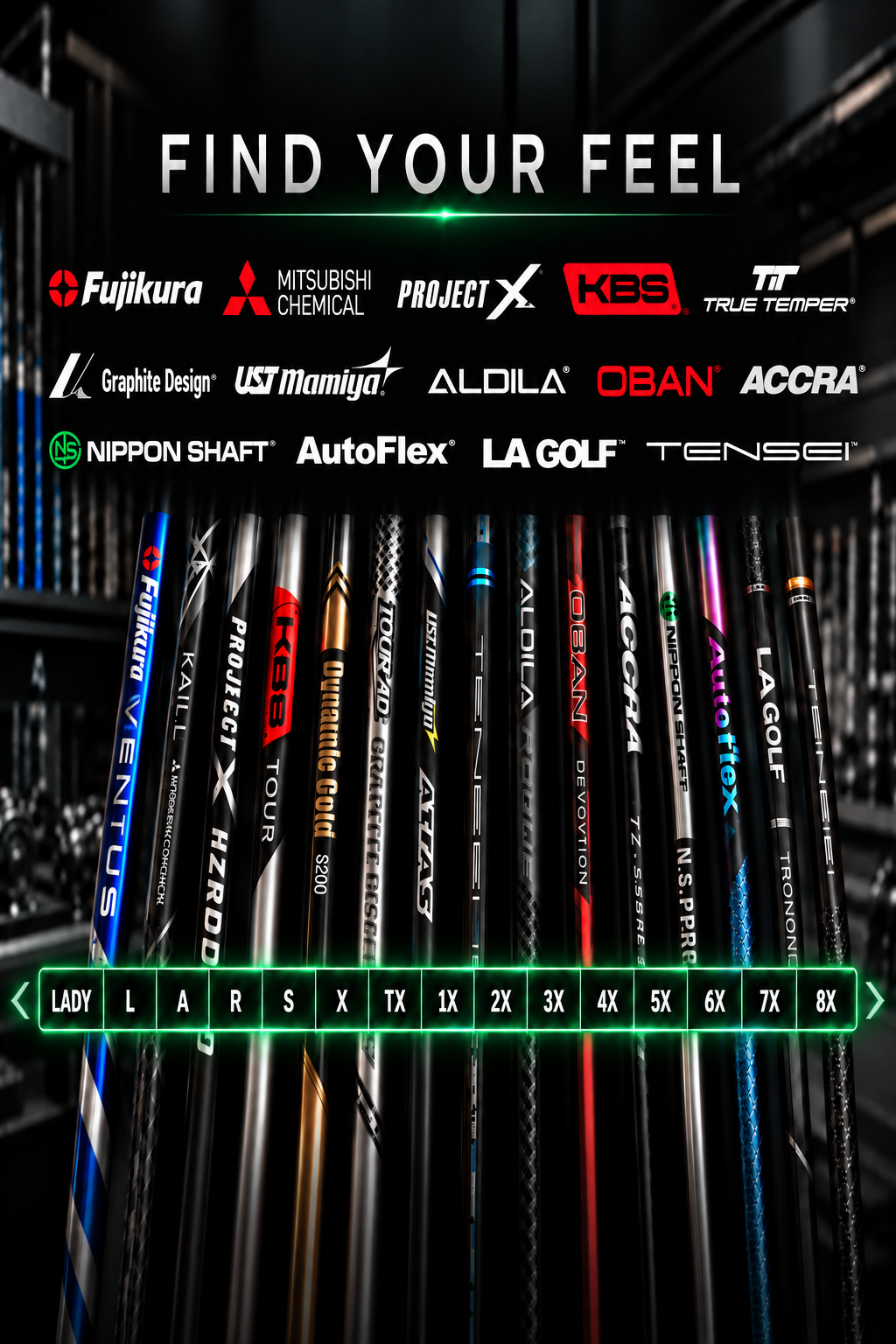
Where relevant, evaluate shaft weight, flex or profile, feel and how the golfer delivers the club.
Consider length, loft, lie, grip and swing-weight-related factors where appropriate.
Look at carry-distance separation and whether the bag creates practical, usable yardage gaps.
Explain what should change, what should stay, why, and how the recommendation connects to the player’s game.
Understand the numbers
These concepts can help explain ball flight and equipment decisions. Which information is relevant depends on the golfer, the question and the available setup.
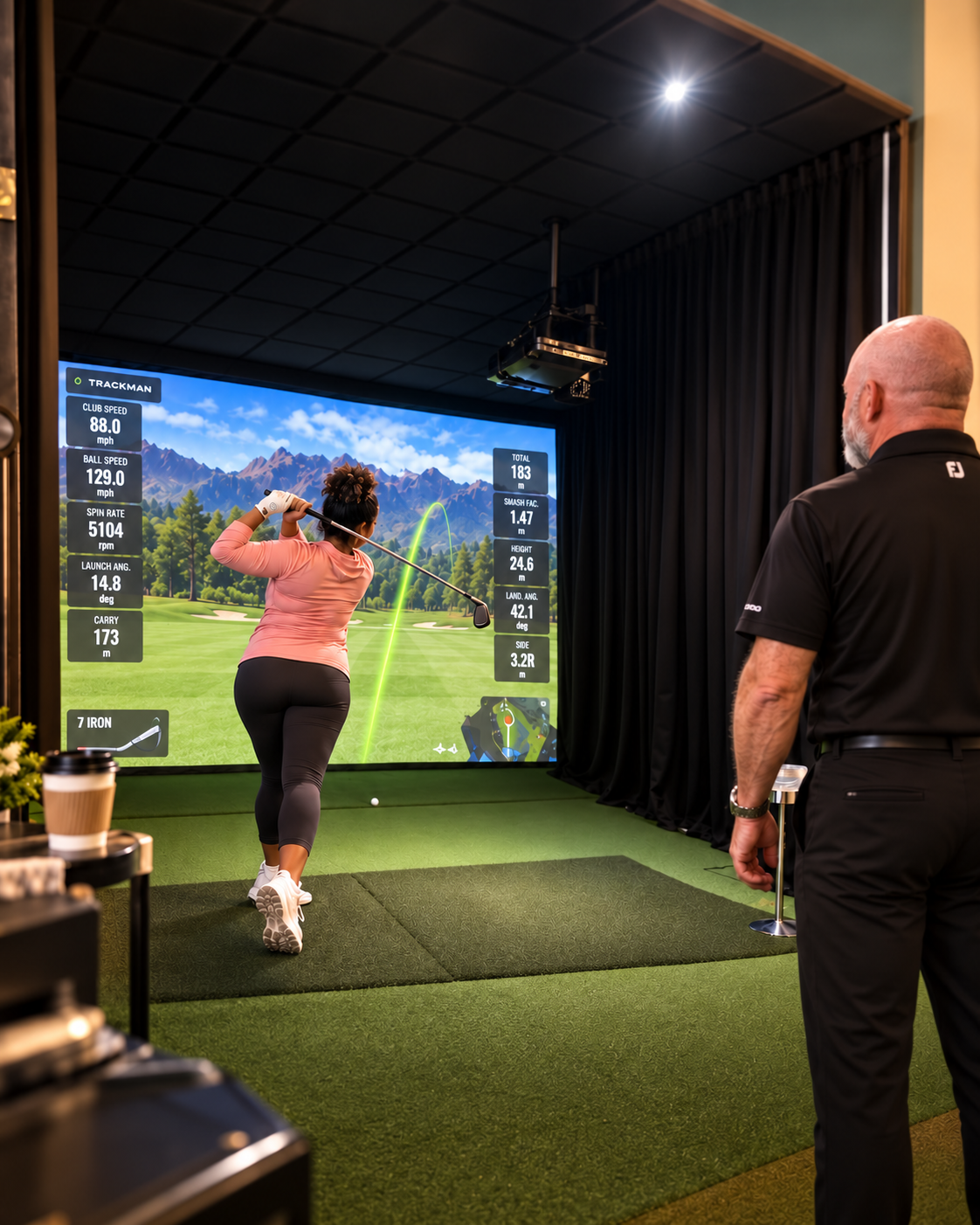
How fast the ball leaves the club after impact.
The initial vertical angle of the ball flight.
The rotation of the golf ball that influences flight, stability and stopping behaviour.
How far the ball travels through the air before landing.
Carry plus rollout. Course conditions can influence how far the ball rolls.
The maximum height reached during the shot.
Where the golf ball begins relative to the intended target line.
How and how much the ball moves left or right after launch.
How consistently impact occurs around a predictable part of the clubface.
The overall pattern of shots rather than a judgement based on one perfect strike.
The practical carry-distance separation between clubs.
Across the bag
The areas below show what a fitting conversation may cover. They are educational possibilities, not a guaranteed menu of currently bookable categories; contact 4D Golf to confirm the suitable service.
Launch, spin, strike, trajectory, shot pattern and confidence with the longest club.
Useful flight, carry and the relationship between the top end of the bag.
Strike, start direction, trajectory, distance consistency and practical set composition.
Loft spacing, useful carry windows and the shots required around the green.
Setup, visual confidence, start direction and how the putter supports a repeatable roll.
A broader look at how the clubs work together and where overlap or missing jobs may exist.
A practical review of carry-distance separation across relevant parts of the bag.
How specifications interact
Equipment specifications interact with one another and with the player. A single feature should not be treated as an automatic answer.
Can influence feel, delivery and how the golfer sequences the club.
Can influence feel and how the shaft responds to the golfer’s motion.
Can influence launch, spin, forgiveness, visual confidence and shot pattern.
Can influence launch, spin and practical distance.
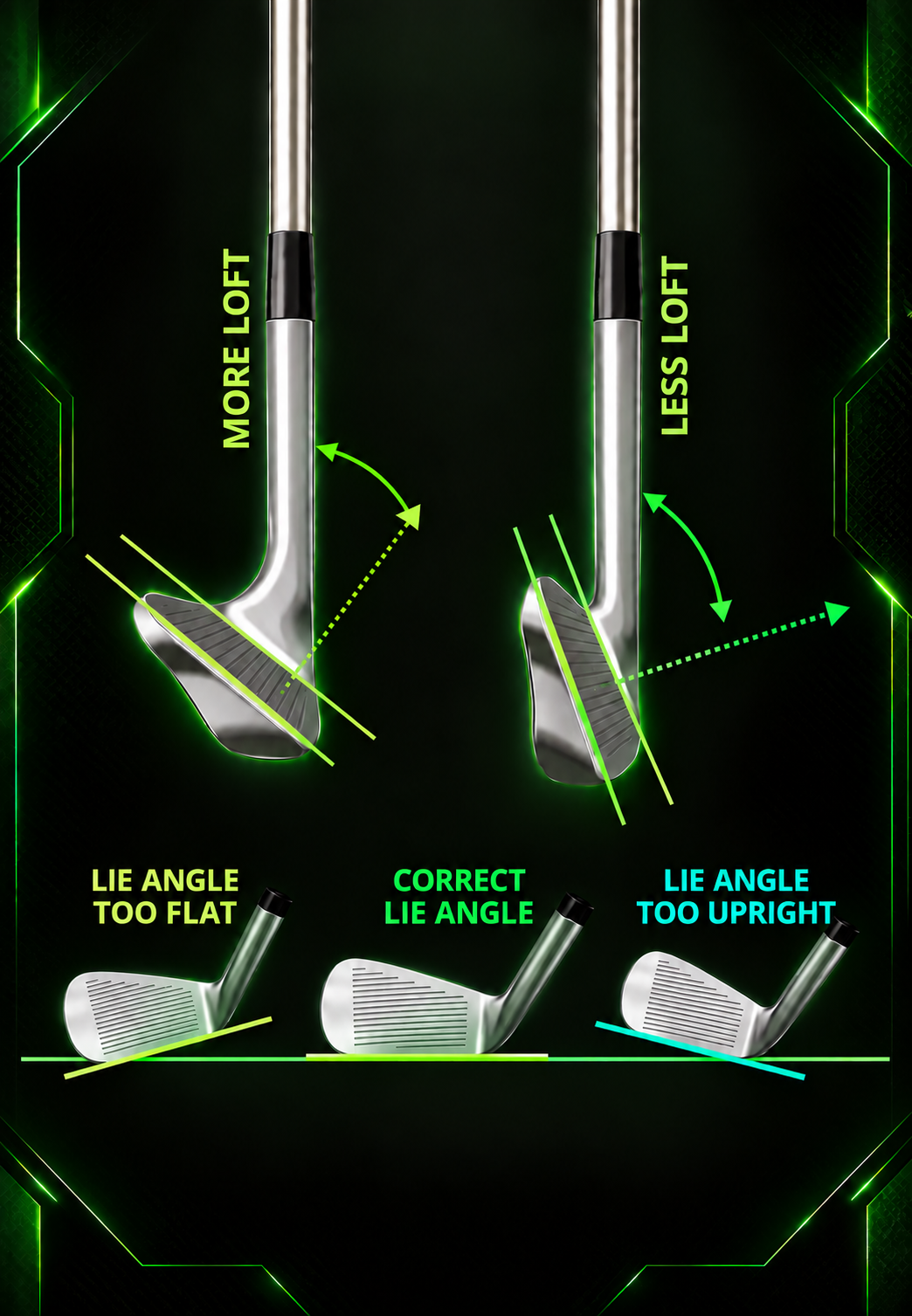
Can influence delivered face orientation and start direction, particularly with irons and wedges.
Can influence setup, strike and delivery.
Size and feel can influence comfort and connection with the club.
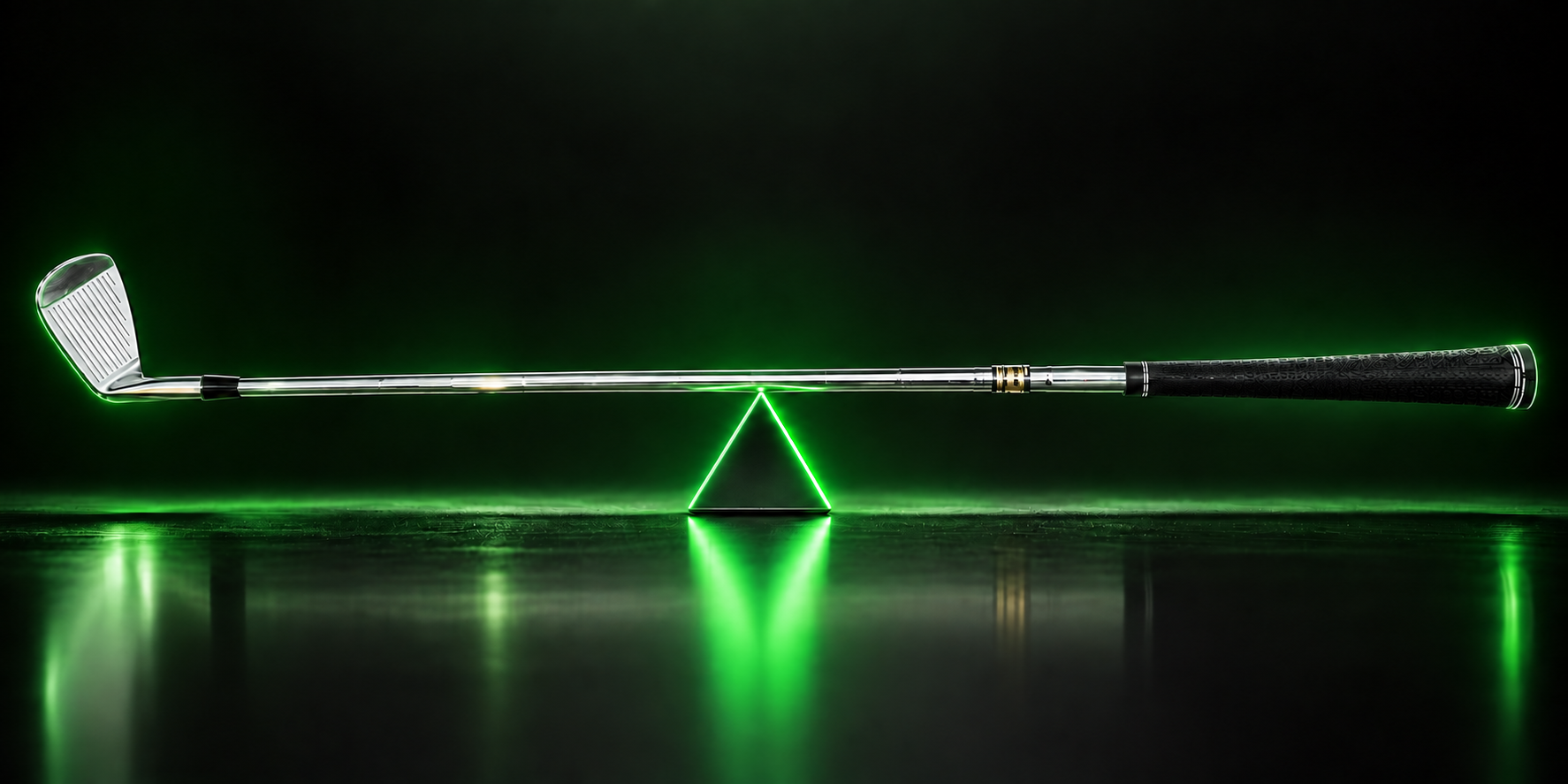
The golfer’s sense of balance can influence timing and feel.
Gapping
A strong golf bag should give the player useful, repeatable distance windows rather than multiple clubs producing almost the same result or leaving large gaps.
Simulator training
A simulator can be more than a place to hit golf balls. Used with a clear objective, a controlled environment can help a golfer understand distance, shot pattern, trajectory and decision-making while making practice more measurable.
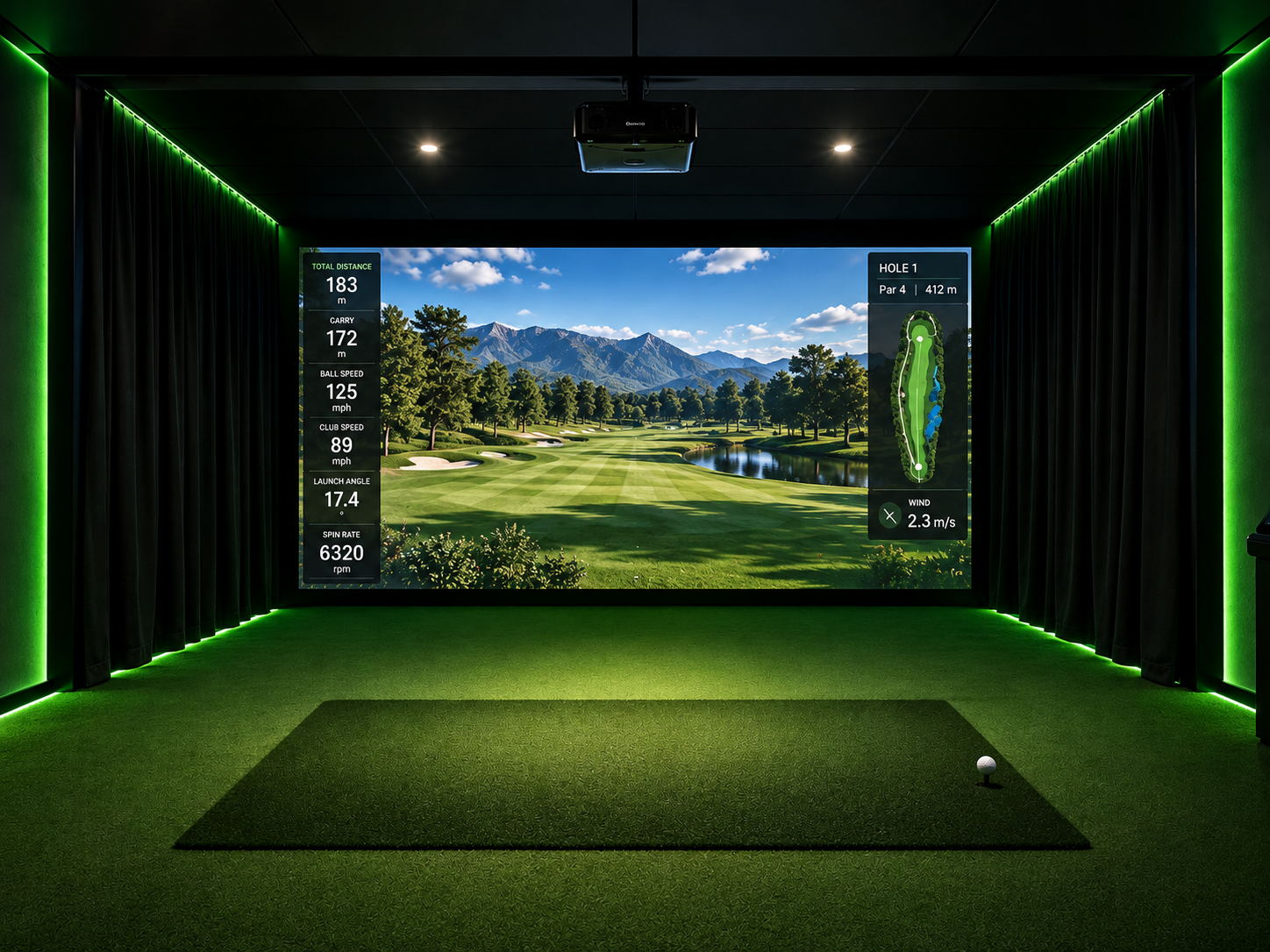
Depending on the player, objective and session format, simulator training possibilities can include:
Build a clearer understanding of actual carry distances.
Explore how the full bag separates in distance.
Develop useful carry numbers for full and partial wedge shots where appropriate.
Understand normal dispersion rather than judging only the best strike.
Understand where shots begin and how they move.
Explore controlled trajectory or curvature when appropriate to the player’s level.
Use scoring or challenge formats to make practice more demanding.
Work on target selection, club choice and decision-making in simulated golf.
Repeat appropriate challenges over time to create comparable reference points.
Home simulator studio
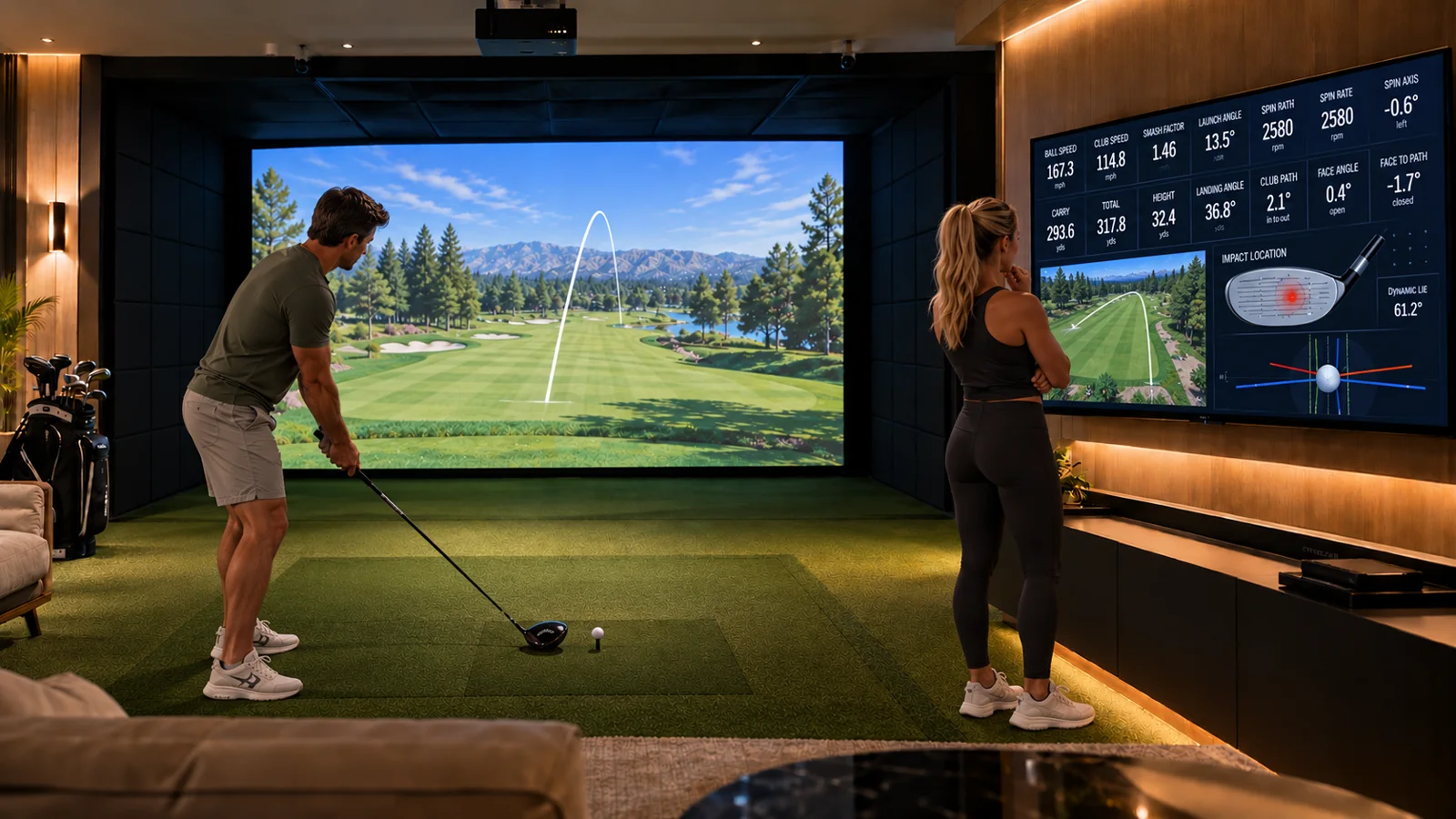
4D Golf can take your simulator vision from concept to completion. From room planning and simulator technology to the impact screen, projector, hitting mat, launch monitor, computer system, lighting and finishing touches—we help create a complete golf simulator studio built around your space, your game and your goals.
We discuss your space, goals, budget and vision to understand exactly what you want to build.
We measure your room and assess ceiling height, width, length, clearance and available installation space.
We design the ideal simulator layout around your room, equipment requirements and preferred overall appearance.
We select the launch monitor and simulator technology best suited to your game and requirements.
We install the impact screen, enclosure and protective elements required for a safe simulator environment.
We install and position the projector for a clear, immersive and correctly aligned simulator display.
We install the hitting mat, artificial turf and flooring to complete your professional playing area.
We connect and configure the computer, simulator software, launch monitor and complete digital golf system.
We complete the studio with lighting, storage, seating, branding and other personalised finishing details.
We test, calibrate and complete your simulator before handing over your finished 4D Golf studio.
Technology philosophy
Technology can reveal information that is difficult to measure consistently by eye. But a number on a screen is not automatically an answer. The value comes from interpreting that information in the context of the golfer, the shot they are trying to play and the change they are trying to make.
4D Technology Philosophy
Measure what matters. Interpret it for the player. Apply it to the game.
Fitting vs coaching
Sometimes coaching is the priority. Sometimes equipment is the priority. Often they interact—and sometimes the current clubs are completely suitable.
When the highest-value change is a skill, movement, strike or decision the player can develop.
When a specification may be limiting usable flight, strike, confidence or practical gapping.
When the clearest plan needs to consider how the player and equipment influence the same outcome.
Not every golfer needs new clubs. Sometimes the best recommendation is to keep what already works and focus on the player’s skill.
Prepare for the conversation
For a fitting or gapping enquiry, bringing current equipment gives 4D Golf a useful baseline for comparison. The useful items depend on the session, so confirm specifics when booking.
Current relevant clubs
Normal golf shoes if appropriate
Preferred golf glove
Typical golf ball if relevant
A clear idea of the problem or goal
Questions
No particular playing standard is published as a requirement. A fitting conversation starts with the golfer, the current equipment and the problem or goal they want to understand.
Whether you are trying to understand your current clubs, improve your distance gaps or practise with clearer feedback, start by telling us what you want to solve.